"hiding" in the trees as I approached
(click on pictures to enlarge)

took these pictures as they were flying away from me

"Unlike most other galliform birds, the brownish-olive Chachalaca prefers to spend much of its time in the trees, earning it the nickname of Mexican Tree Pheasant and allowing it to thrive in tangled brushland resulting from logging or other mechanical habitat manipulation. Chachalaca prefer to run along larger limbs through the treetops or scurry through interior branches while feeding on leaves, berries, and seeds. Birds feed in loose flocks of 4-6 in number and tend to select the ripest fruits available, therefore they are often observed feeding in precarious positions, including upside-down. Chachalaca do not scratch on the ground for food, however they will seek out insects and invertebrates when encountered. Feeding activities are generally concentrated near native food sources. Chachalaca also readily consume feed supplied by humans-preferring cracked corn and milo. Flight is heavy and rarely sustained, but brief bursts can be swift and silent. Plain Chachalaca hens typically lay 3 eggs in flimsy-appearing nests constructed on tree limb forks. Like other galliform species, re-nesting is common if initial nests or broods are destroyed. The precocial young are able to cling to tree branches as soon as they dry and can fly short distances within a week of hatching. Adult birds commonly live 5- 8 years in the wild."
Information from Texas Parks and Wildlife
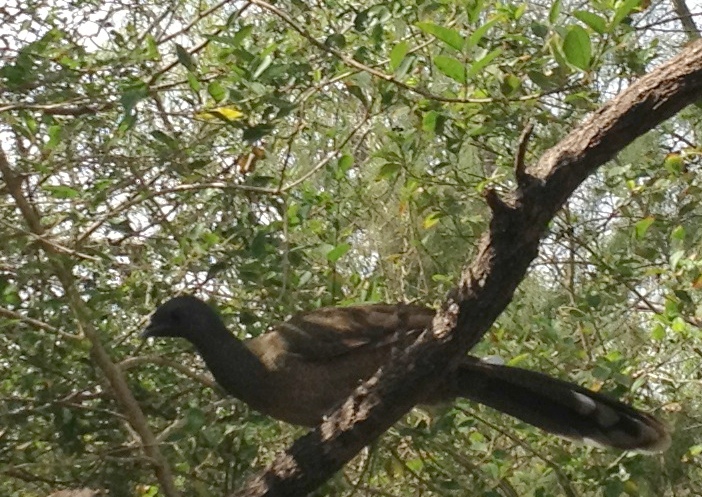
They were running around, through the hole in the fence and when I approached, they flew into the trees.
(The feral hogs keep destroying the fence and we keep trying to repair it.)

I took several pictures with my iPhone. I cropped the pictures the best that I could.

These are not the pretty, colorful birds that I typically see around the Visitors Center, but they are still interesting and they allowed me to get close to them today.